Scuba diving is Thailand’s most popular water sport and the country boosts some of the most beautiful dive sites in the world – the water is clear, sea life plentiful, transport and accommodation readily available and instruction to a very high standard. Diving in Thailand is comparatively cheap, and once you have achieved your certification in Thailand, you can use it to go scuba-diving all over the world.
Diving is available at all times of the year, although visibility changes according to the season. In the Andaman Sea, the best time to dive is from October to April, and in the Gulf of Thailand from May to September. At recommended dive sites in Thailand the water is so clear that the under-water world is visible from the surface: whale sharks, manta rays, marlin, flying fish, dolphins and coral reefs.
All reputable dive shops are affiliated with PADI or other international dive bodies, and most hold courses in multiple languages. All over Thailand, you can expect modern amenities, international standard boats and professional facilities.
For group or family travelers, all good live aboard operations will take non-divers along at a substantially reduced fee. Friends and family can relax, swim, sunbathe, snorkel and still enjoy the food, trip, scenery and experience of sailing in some of the world’s most beautiful waters
Sunday, January 31, 2010

Canoeing & Kayaking
Nature has blessed. Thailand with many natural treasures guarded in national parks that extend across the Kingdom. They are the habitat of a great profusion of wildlife, and plants ranging in size from tiny forest floor flowers to towering trees.
From the fertile Central Plains watered by the Chao Phraya River, the land rises to the northeastern plateau, then north to the forested mountains of Chiang Mai, Chiang Rai and Mae Hong Son. Along the southeastern coastline and the long southern peninsula, rain forests and coastal mangroves predominate. Below the central hills, wetlands extend to the Gulf of Thailand on the western side and the Andaman Sea to the east.
Deciduous trees shed their leaves during the six-month dry season in the North. On high hills there are pine and
maple forests; in the South, there are evergreens, freshwater swamps, rubber trees, fruit trees, palms of all kinds and tropical hardwoods.
Northern Thailand is characterised by forested hills and deep valleys that are an invitation to adventures: rafting along fast-flowing rivers, trekking along jungle paths, or discovering waterfalls cascading down cliff faces, like the Ti Lo Su falls in remote Umphang.
Chiang Mai, Thailand’s second city, was once the capital of the ancient Lanna kingdom. In the countryside around it there are elephant camps where you can see these much loved creatures at work and play, and hire one with a mahout to take you on a trek. There is much to see when trekking in the North, like the orchid farms and botanical gardens along the Mae Sa Valley, the towering splendour of Doi Inthanon, Thailand’s highest mountain, the villages of the hill people and the
handicraft centres of Sankhamphaeng where village artisans work in silk, cotton, wood and silver.
Further North, Chiang Rai is the home of many ethnic hill people in distinctive costumes, and they are proud
to show visitors their age-old customs and traditions. Doi Tung is a mountain that has been transformed into a garden of flowers and fruit plantations.
Thailand’s national parks are usually accessible by road, and the most popular of these, Khao Yai, is just a three-hour drive from Bangkok. Khao Yai attracts a large number of visitors with its scenic beauty and abundant plant and animal life. It covers four vegetation zones: evergreen rainforest, semi-evergreen, mixed deciduous, and hill evergreen forest, at altitudes from 100 metres to 1,400 metres. Kaeng Krachan is Thailand’s largest park with 3,000 square kilometres of
evergreen and mixed deciduous forests.
It is recommended for its long-distance hiking trails, though few hikers and campers have ventured into the interior where the wildlife is most abundant. In the northeastern province of Loei by the border with Laos, Phu Kradung National Park is famous for its pine forests and mountain views. A nine-kilometre trail leads to the flat summit of a mountain where tents can
be rented for the night. Chaiyaphum’s Nam Nao National Park has dry forest, bamboo groves, and rolling sandstone hills, and it adjoins Phu Khieo Wildlife Sanctuary.
In the South, Thale Ban National Park is nearly 200 square kilometres of rainforest along the Malaysian border. Hiking trails lead you through spectacular limestone formations and the forest abounds with birds, macaques, and gibbons. Khao Sok National Park in western Surat Thani is connected to the Khlong Saen Wildlife Sanctuary and together they form the largest tract of virgin forest in southern Thailand, with trails to scenic caves and waterfalls.
Travelling in green Thailand is an experience like no other, and the exciting diversity of the country’s natural heritage will guarantee a perfect adventure holiday
From the fertile Central Plains watered by the Chao Phraya River, the land rises to the northeastern plateau, then north to the forested mountains of Chiang Mai, Chiang Rai and Mae Hong Son. Along the southeastern coastline and the long southern peninsula, rain forests and coastal mangroves predominate. Below the central hills, wetlands extend to the Gulf of Thailand on the western side and the Andaman Sea to the east.
Deciduous trees shed their leaves during the six-month dry season in the North. On high hills there are pine and
maple forests; in the South, there are evergreens, freshwater swamps, rubber trees, fruit trees, palms of all kinds and tropical hardwoods.
Northern Thailand is characterised by forested hills and deep valleys that are an invitation to adventures: rafting along fast-flowing rivers, trekking along jungle paths, or discovering waterfalls cascading down cliff faces, like the Ti Lo Su falls in remote Umphang.
Chiang Mai, Thailand’s second city, was once the capital of the ancient Lanna kingdom. In the countryside around it there are elephant camps where you can see these much loved creatures at work and play, and hire one with a mahout to take you on a trek. There is much to see when trekking in the North, like the orchid farms and botanical gardens along the Mae Sa Valley, the towering splendour of Doi Inthanon, Thailand’s highest mountain, the villages of the hill people and the
handicraft centres of Sankhamphaeng where village artisans work in silk, cotton, wood and silver.
Further North, Chiang Rai is the home of many ethnic hill people in distinctive costumes, and they are proud
to show visitors their age-old customs and traditions. Doi Tung is a mountain that has been transformed into a garden of flowers and fruit plantations.
Thailand’s national parks are usually accessible by road, and the most popular of these, Khao Yai, is just a three-hour drive from Bangkok. Khao Yai attracts a large number of visitors with its scenic beauty and abundant plant and animal life. It covers four vegetation zones: evergreen rainforest, semi-evergreen, mixed deciduous, and hill evergreen forest, at altitudes from 100 metres to 1,400 metres. Kaeng Krachan is Thailand’s largest park with 3,000 square kilometres of
evergreen and mixed deciduous forests.
It is recommended for its long-distance hiking trails, though few hikers and campers have ventured into the interior where the wildlife is most abundant. In the northeastern province of Loei by the border with Laos, Phu Kradung National Park is famous for its pine forests and mountain views. A nine-kilometre trail leads to the flat summit of a mountain where tents can
be rented for the night. Chaiyaphum’s Nam Nao National Park has dry forest, bamboo groves, and rolling sandstone hills, and it adjoins Phu Khieo Wildlife Sanctuary.
In the South, Thale Ban National Park is nearly 200 square kilometres of rainforest along the Malaysian border. Hiking trails lead you through spectacular limestone formations and the forest abounds with birds, macaques, and gibbons. Khao Sok National Park in western Surat Thani is connected to the Khlong Saen Wildlife Sanctuary and together they form the largest tract of virgin forest in southern Thailand, with trails to scenic caves and waterfalls.
Travelling in green Thailand is an experience like no other, and the exciting diversity of the country’s natural heritage will guarantee a perfect adventure holiday
Sunday, December 13, 2009
Koh Kuud in Trat

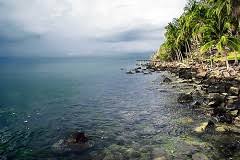
Koh Kuud is the second-largest island in the Koh Chang National Marine Park (around 130 square kilomtres), furthest from the mainland, and certainly one of the nicest islands in the group. Koh Kuud offers some excellent views; coconut groves, rubber plantations, exquisite beaches, and it also has a number of beautiful waterfalls (3-tier Klong Jao of particular interest as is active all year round). Virtually all of Koh Kuud is unspoilt and what development there is has been well planned. The island has a number of excellent beaches on its west coast; Hap Tapho being probably the nicest, although Klong Yaikee beach, Tapo beach, Paol Bay, and Tadean Bay are also worthy of note. The waters around the island feature severl types of coral. 99% of the visitors who come to the island do so through an organised tour. As a result the island is not very well geared to receive independent travellers, although coming here alone is not impossible. The tours offer a number of options (three days / two nights, etc.) and usually include travel, food and accommodation. They usually involve trips to waterfalls and snorkelling trips as part of the package.
Koh Chang in Trat
/panviman-koh-chang-resort/pic1-panviman-koh-chang-resort.jpg)
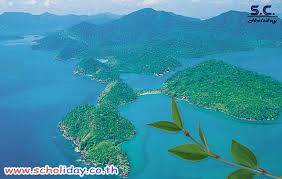

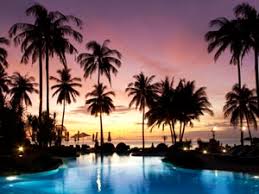
Koh Chang is the focal point of Koh Chang National Marine Park. Until recently Koh Chang and the park were well kept secrets, even from local Thais. They received very few visitors and as a result there was little development. This is quite remarkable given its close proximity to Bangkok – only 330 kilometres direct. Over the last couple of years though their have been plans to develop Koh Chang into an upscale resort and as a result there has been an increase in the amount of building that has taken place on the island.
Koh Chang is the largest of the 52 islands in Koh Chang National Marine Park and the second-largest island in Thailand. Most of the island is rainforest and it features a range of hills, the highest (Khao Jom Prasat) nearly 800 metres high. The result is a very dramatic landscape that acts as a backdrop for some excellent bays and beaches including Ao Klong, Hat Sai Khao and Ao Khlong Prao. The island is also home to a wide range of wildlife, including a good selection of birds, snakes, deer and a number of elephants. The island and its vicinity are great places for snorkelling and diving. The best time to dive here is between November and April and the south of the island offers the best visibility. For more advanced divers there is a Thai warship that was sunk by the French in 1941. A number of excellent diving centres offering courses and guides are available on the island. Kayaking and sail boarding are also available on the island.
The island is also a great place for hikes, and it is possible to walk from one side of the island to the other (although it’s not advisable without a guide). Elephant rides into the jungle are also popular. Elephants based at Ban Khlong Son Elephant Camp can be hired for 900 baht for one and a half hours. The more usual attractions like Buddhist temples are also available on the island.
Ao Tan Khu in Trat


Ao Tan Khu is a bay with fine sandy beach popular with local people during holidays.
It is 4 kilometres. Off Highway No. 3156 (Ban Saen Tung-Laem Ngop).
Koh Ngai (Koh Hai) in Trang


Located 13 kilometers south of Koh Lanta, Koh Ngai is one of the Koh Lanta group of islands that make up the Koh Lanta National Marine Park. A small, triangular island, less than 5 square kilometers in size, Koh Ngai (also known as Koh Hai) has a forested interior and offers white-sand beaches alongside clear water and good coral which encircles the entire island making it a perfect place for snorkeling. There is limited accommodation on the island, mostly clustered around the eastern coastline. There is a variety of types of accommodation available, and a range of prices to choose from, but with so few places to stay in, Koh Ngai is a very quiet and peaceful place – probably best to try to book somewhere in advance if possible to be on the safe side. Other islands in the area include Koh Chuek, Koh Waen, Koh Mah and Koh Muk, and you can arrange tours to these islands from the accommodation outlets on Koh Ngai.
How to get there: Although officially part of Krabi province, the easiest way to get to Koh Ngai is from Pak Meng Beach in Trang. Regular ferries run from Pak Meng and its also possible to rent boats to cater for groups.
Hat Chao Mai in Trang


Hat Chao Mai
Trang
Hat Chao Mai is a central feature of Hat Chao Mai National Park in Katang District of Trang. The 5-kilometre-long beach offers white sand set against some thick forest, limestone hills and caves.
How to get there: The beach is accessible by minibus from Trang and the fare is around 50 Baht.
Subscribe to:
Posts (Atom)
Bookmark

Subscribe To


 Posts
All Comments
Posts
All Comments
Copyright © Thailand tourist Information | Blogger Theme by BloggerThemes